Anyone planning a coastal getaway in Thailand eventually faces the choice between mainland ease and island luxury: Hua Hin vs Koh Samui, which one actually suits the trip you want? While both deliver world-class hospitality and beautiful coastlines along the Gulf of Thailand, they offer distinct travel experiences.
Hua Hin is a composed royal-heritage town on the mainland that leans into wellness, golf, and unhurried beach life. Koh Samui, on the other hand, is a lush tropical island renowned for turquoise waters, palm-fringed beaches, luxury resorts, and vibrant beach clubs.If you’re trying to decide between Hua Hin or Koh Samui, for your next Thailand trip, it really depends less on which destination is “better” and more on what kind of pace you’re looking for.
This guide breaks down the practical differences, transport, beaches, length of stay and overall vibe and explains why Hua Hin, in particular, has become the top choice for travellers seeking rest and rejuvenation rather than constant activity.
| Category | Hua Hin | Koh Samui |
| Overall pace | Calm, unhurried, resort-style | Tropical, lively yet luxurious |
| Nightlife | Quiet evenings, early nights, night markets | Beach clubs, vibrant bars, full moon access |
| Beach Experience | Long, walkable, less crowded | White sand, turquoise waters, classic island bays |
| Wellness & Relaxation | Strong: spas, retreats, Chiva-Som | High-end island spas and yoga sanctuaries |
| Travel time from Bangkok | ~3 – 4 hours by road | ~1-hour direct flight |
| Recommended stay | 3 – 7 days | 3 – 7 days |
| Best suited for | Rest, recovery, golf, slower holidays | Tropical beach holidays, luxury island escapes |
Koh Samui, located in the Gulf of Thailand in Surat Thani province, is a world-famous island defined by dramatic palm groves, granite boulders, and clear tropical waters. Areas like Chaweng and Lamai offer bustling nightlife and beach parties, while places like Bophut’s Fisherman’s Village and Choeng Mon cater to families and luxury seekers looking for boutique charm and fine dining.
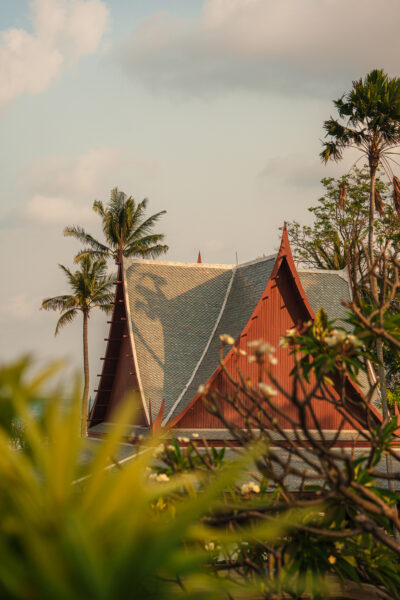
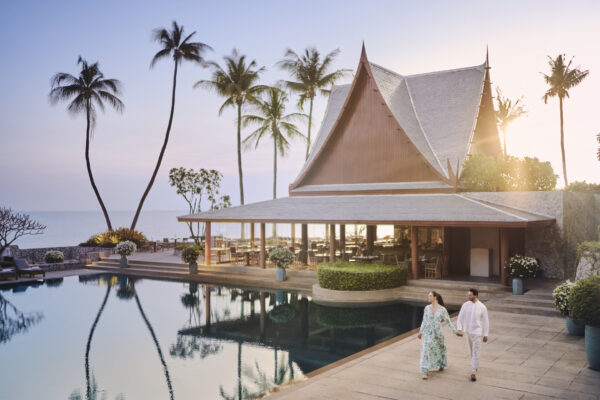
Hua Hin, roughly 200 kilometres south of Bangkok in Prachuap Khiri Khan province, tells a different story. As a former royal retreat and the site of the Klai Kangwon Palace, the town has grown around a culture of restraint and orderliness rather than spectacle. Days here revolve around golf at courses like Black Mountain, slow café mornings, seaside walks and browsing markets such as Cicada and Chatchai in the evening. There’s no loud nightlife scene to speak of and that’s very much the point for the travellers who choose it.
So when people ask which is better, Hua Hin or Koh Samui, the real question is which atmosphere matches your travel style.
Curious about everything Hua Hin has on offer? Our full Travel Guide to Hua Hin covers the town’s attractions, food scene and best neighbourhoods in more detail.
Transport convenience is a key difference between the two towns, so consider it when planning where to stay.
If your schedule allows you to experience both coastlines in one trip, planning the journey from Samui to Hua Hin is fairly straightforward.
The fastest option involves taking a direct flight from Samui Airport up to Bangkok, followed by a comfortable private transfer down the coast to Hua Hin.
Travelers looking for a scenic overland trip can board a ferry from Koh Samui’s Nathon or Lipa Noi piers over to Donsak Pier on the Surat Thani mainland. From there, you can easily connect to a northbound express train or long-distance coach that takes you straight into Hua Hin in roughly 5 to 7 hours total.
Given the difference in transit style and atmosphere, ideal stay lengths vary between the two towns.
If your schedule allows for both splitting a longer Thailand holiday between a few days in Koh Samui and a longer, calmer stretch in Hua Hin is a popular way to get the best of both.
Beach quality is another area where the two towns diverge and it’s a key factor in the Hua Hin vs. Koh Samui decision for anyone whose trip centres on the coastline.
Koh Samui delivers the quintessential tropical island aesthetic with soft white sand, leaning palm trees, and warm, crystal-clear water that makes swimming and snorkeling a dream throughout most of the year.
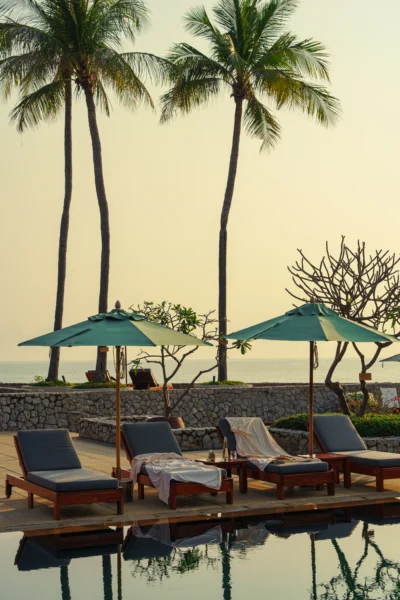
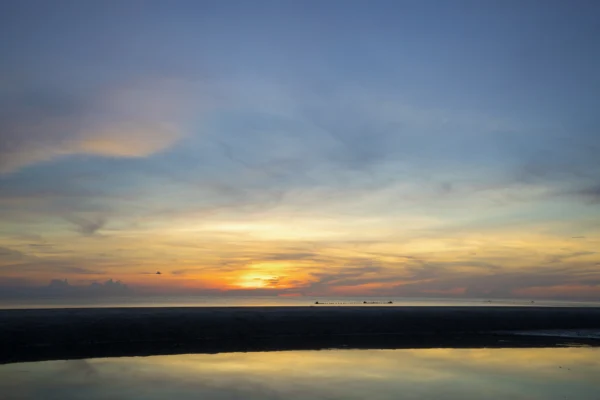
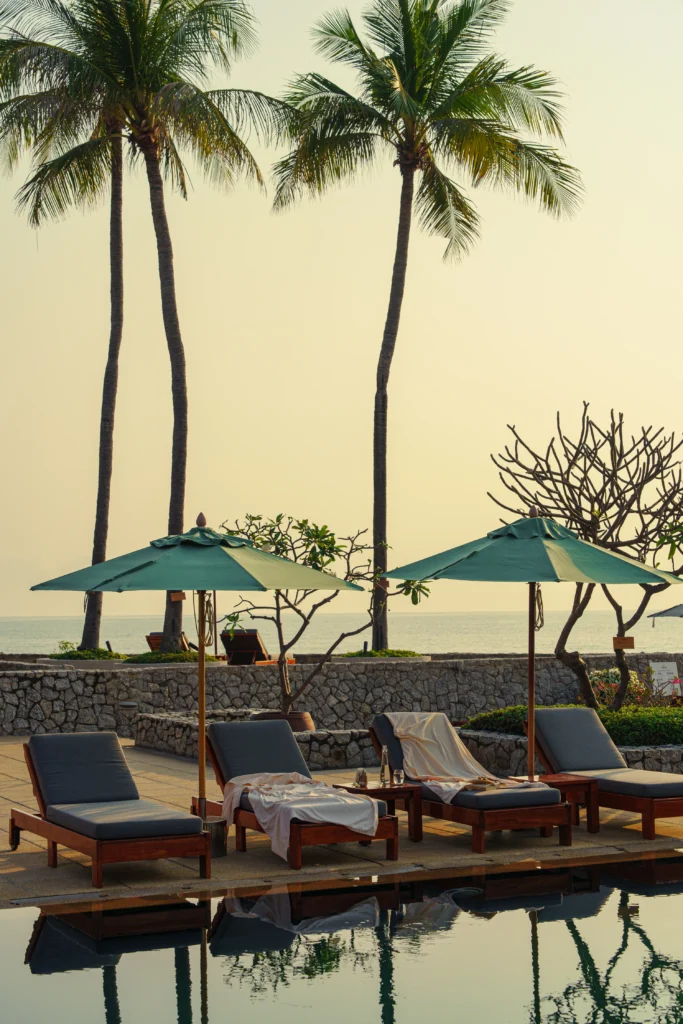
Hua Hin features a wide, sweeping stretch of coastline that feels expansive and quiet. While the sea clarity reflects typical mainland gulf conditions rather than tropical island blue, the long beach provides endless space for peaceful walks, kiteboarding, and horseback riding along the shore without the heavy crowds.
Hua Hin is particularly known for its wellness travel. The town’s unhurried pace, drier climate (thanks to a natural rain shadow cast by the Tenasserim Hills) and long-standing reputation as a royal getaway have made it one of Thailand’s most established destinations for rest-focused holidays.
This ethos is best exemplified by the Chiva-Som retreat, one of the most recognised wellness destinations in the region, offering structured programmes around areas such as gut health, weight management and fitness alongside its spa and treatment facilities.
For travellers who want their holiday to actively contribute to their wellbeing rather than simply providing a change of scenery, this is exactly the kind of experience Hua Hin is built to support.
Between Hua Hin vs. Koh Samui, the choice really depends entirely on what you want out of the trip:
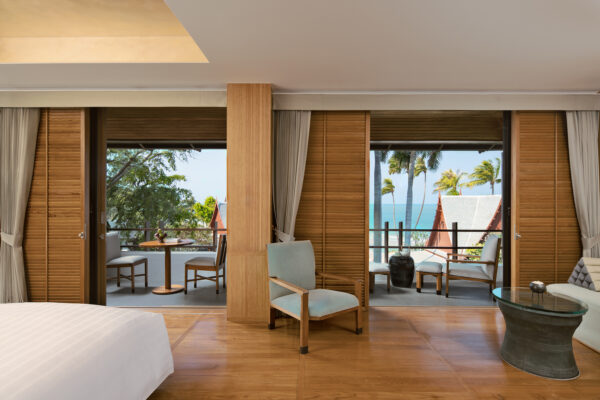
Hua Hin is ideal for deep relaxation, thanks to its unhurried pace, tranquil beaches, and world-class health retreats like شيفا-سوم. Koh Samui offers a more vibrant island style of relaxation centered around luxury beach resorts and oceanfront villas.
Flying from Samui to Bangkok and driving down to Hua Hin takes around four to five hours in total transit time. Taking the ferry from Samui to the Surat Thani mainland and boarding a northbound train or coach to Hua Hin takes approximately six to eight hours.
Both destinations cater wonderfully to families. Hua Hin offers a stress-free ground drive from Bangkok, quiet streets, and family-friendly resort grounds. Koh Samui is ideal for families with older children or teens who want island boat trips, snorkeling, and water sports.